Tackling Disinformation
Disinformation isn’t new — but in today’s digital media landscape it spreads faster, travels further, and affects trust, democracy, and community cohesion. This engaging and interactive workshop helps people understand why disinformation spreads and, crucially, how we can respond to it together.
Rather than telling participants what to think, the workshop creates space for learning, discussion, and collective sense-making across three key approaches:
- Media & platforms – journalism, regulation, and accountability
- Education – media literacy and critical thinking
- Community – collaboration, trust, and local action
What participants gain
- A clearer understanding of how disinformation spreads
- Exposure to a wide range of responses and perspectives
- The chance to deliberate and identify the most promising ideas together
Workshop process (2 hours)
This session blends accessible learning tools with structured conversation and democratic decision-making.
Part 1: Shared learning
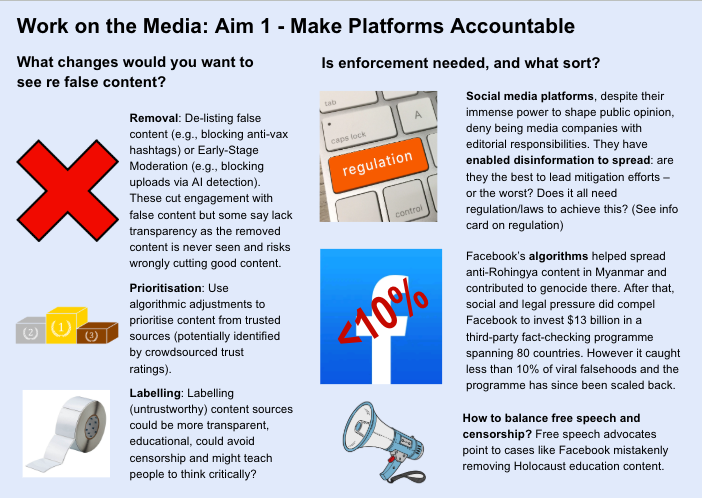
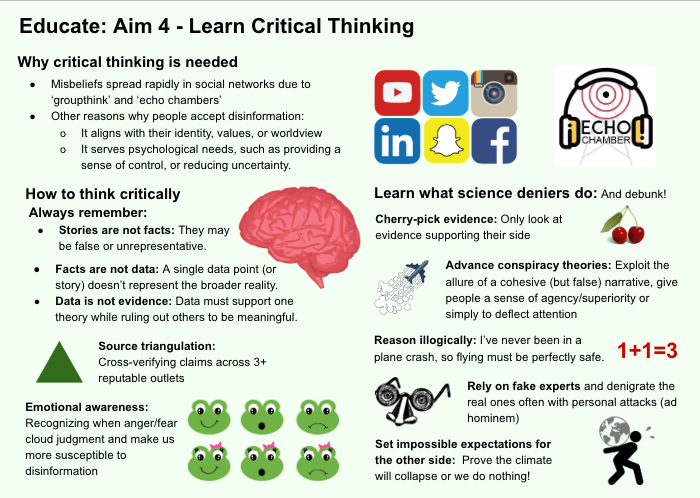
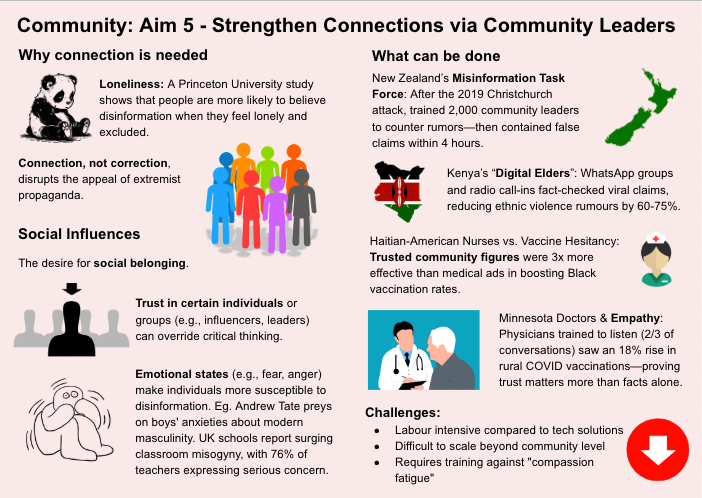
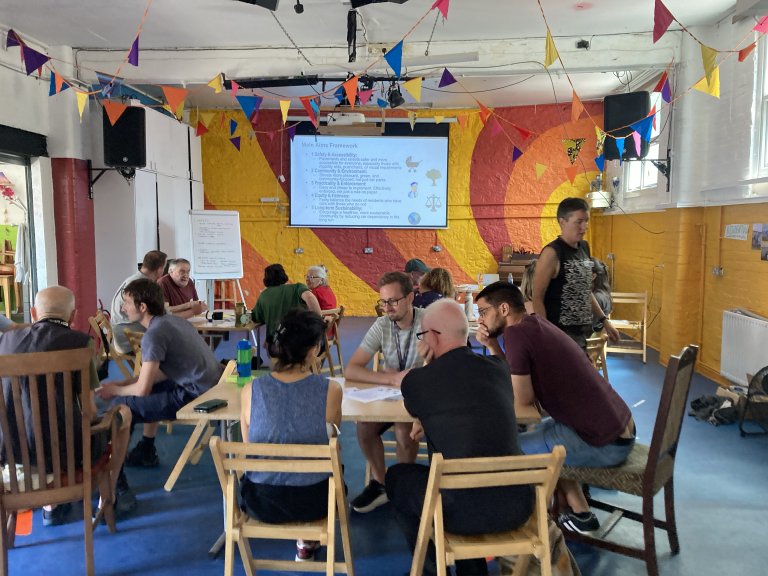
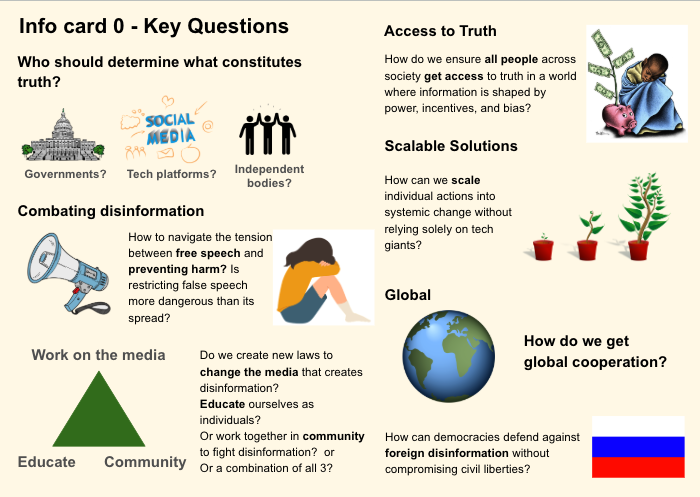
Participants explore the topic using 15 independently researched infographic cards, supported by quiet reading time, quizzes, and small-group discussion. Each person dives deeper into one of the three approaches, ensuring both depth and diversity of insight.
Part 2: Collective deliberation
Groups come together to discuss how different approaches can work in combination. Ideas are refined, shared, and submitted to Polis, a democratic online platform that allows participants to see areas of agreement, difference, and emerging consensus in real time.
Each workshop contributes to a growing body of collective wisdom across communities.
Format and duration
- Works equally well online or in person
- Standard length: 2 hours but also available in 1-hour and 3-hour formats
Our materials
The workshop uses visually engaging, independently researched infographic cards designed to make complex issues accessible and discussion-ready. You can see a sample here https://drive.google.com/file/d/11eUOk-6uB-nMd-iAREZKeqodsTHYu1ti/view
What participants say
“You created a safe and friendly atmosphere which made discussion easy.”
“I loved the visuals — the handouts were attractive and easy to digest.”
“It was a great mix of individual thinking and group conversation.”
What groups often conclude
Tackling disinformation requires a joined-up approach — combining critical thinking education, media reform, and strong community collaboration, while addressing the deeper systemic drivers behind it.
Interested in hosting a workshop?
Ideal for councils, libraries, schools, and community organisations. Contact paul@winwinalliance.org
Sample Infographic Cards