St Albans residents on energy: divided on green mandates but united on local control and fairness
What a Polis deliberation found about making energy affordable, efficient and resilient in St Albans District
Summer 2026 – Win-Win Alliance, in partnership with Alban Community Energy
In a nutshell
Residents are divided on green framing and mandates – but united that local energy should mean local ownership, a genuine local voice, and fairness for those who can least afford it.
Why we asked
St Albans faces the same energy trilemma as the rest of the country: affordability, efficiency and resilience. Rather than assume what residents think – or hear only the loudest voices – we set out to map the full range of local opinion and find where agreement already exists. We asked one open question: How can we make energy affordable, efficient and resilient in St Albans District?
A survey with a difference
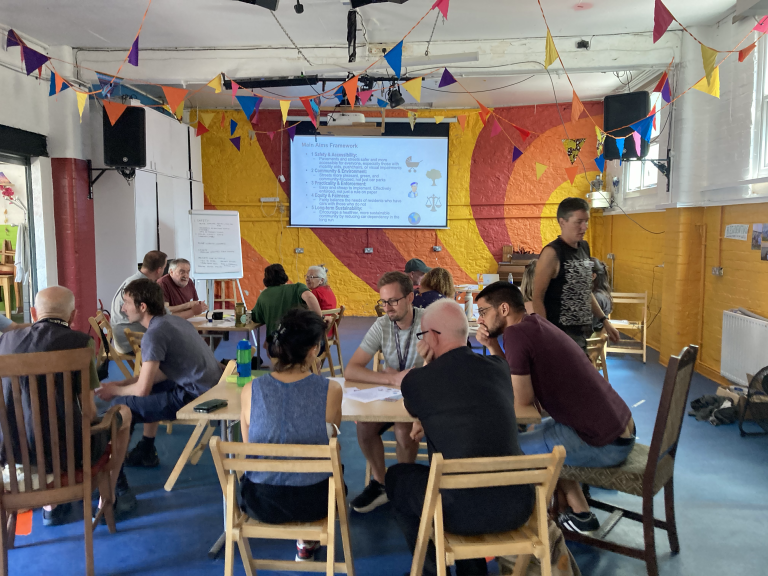
We used Polis, an online deliberation tool. Participants can add their own statements, not just respond to ours, and then rate the statements of others. This does two things a conventional poll cannot:
- It identifies genuine differences of opinion, by grouping people who vote in similar ways – revealing the real fault lines in a community.
- It identifies common ground across those differences. Statements agreed by every grouping are the least controversial – and the most useful starting point for policy makers.
By the time the poll closed, 100 people had voted, with 78 grouped (Polis needs at least seven votes per participant to place them reliably).
This is a self-selecting sample, not a statistically representative survey. Read the findings as a map of arguments and agreements, not a precise measure of district-wide views.
Headline finding: two groupings, clearly divided
| Statement | % of Group A that agreed | % of Group B that agreed |
|---|---|---|
| 2 – St Albans District should be able to meet all of its electricity needs from local renewable sources within the next decade | 5% | 75% |
| 64 – Financial support for low income families to use green energy should be available | 37% | 95% |
| 0 – All new homes should be required to generate renewable energy | 50% | 93% |
| 51 – Mandatory heat pumps and solar panels on homes | 0% | 24% |
| 17 – Energy companies profit too much at the expense of ordinary households | 38% | 89% |
Broadly, Group A leant towards a practical, enterprise-minded outlook – sceptical of full local self-sufficiency, reluctant to mandate changes to existing homes. Group B leant towards a more collective, ambitious green outlook – committed to local renewable self-sufficiency and comfortable with mandates and redistribution. (Our interpretation, not a label applied by Polis.)
The division is real. But that is not the whole story.
The bigger story: substantial common ground
Despite the differences, there was enormous common ground. Fifteen statements drew between 64% and 100% agreement across both groups, averaging 82%. These are the clearest areas of cross-group agreement, clustered into seven themes:

Community ownership, benefit and voice
Residents should be able to buy shares in local renewable projects and have a real say in how they are run.

Local and community energy markets
Neighbourhoods should be able to buy cheaper electricity directly from community projects, sell on equal terms with big companies, and store and share locally generated power.
Public buildings and community generation
Strong support for community-owned solar on hospitals, schools and other public buildings.

Home energy efficiency and retrofitting
Low-income households must not be left behind; upfront costs should not be the main barrier; planning and costs should be made easier for those who want renewables.
New build standards
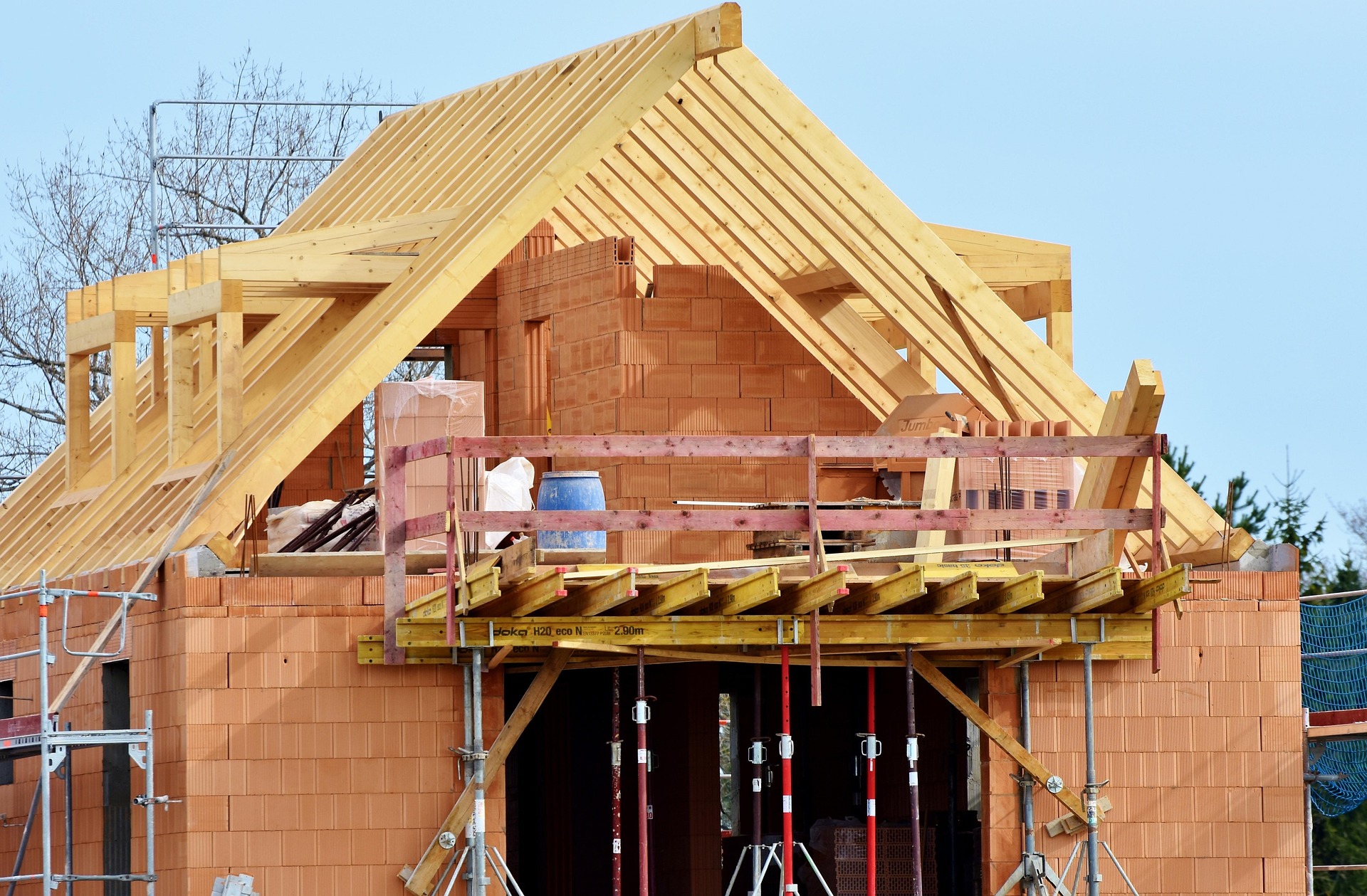
New housing should only go ahead if it is highly energy-efficient from the start.

Fairness, affordability and information
No one should have to choose between heating and eating; people need better information about alternative energy sources.

Learning, nature and broader sustainability
Learn from other towns and adapt ideas locally; increase tree planting in residential areas to offset future cooling costs.
A second tier of 23 statements drew 42–100% agreement, with at least 66% combined across both groups. These are the next least controversial statements for policy makers – the most promising territory for proposals that need to travel across the divide – clustering into six themes: community ownership and voice; local generation and community assets; home efficiency and fair access; fairness and information; energy infrastructure and long-term investment; and transport and EV infrastructure.
(Full statement lists are in the appendix.)
What this means for policy makers
- Low-risk ground exists – and is broad. Community ownership, local benefit, solar on public buildings, support for low-income households (for keeping warm) and energy-efficient new build all command cross-group support. Start here.
- Mandates on existing homes are divisive. Requiring heat pumps or solar panels on existing homes drew 0% support from Group A. Voluntary and incentive-based approaches will do better.
- Fairness and affordability framing is near-universal. “No one should have to choose between heating and eating” is uncontroversial.
- Green ambition divides; practicality unites. Frame proposals around lower bills, local returns and resilience and do not use expressions like ‘green energy’ and ‘net zero’, which are divisive.
- The second tier is where compromise lives – storage, community action and long-term fairness drew mid-range agreement across both groups.
Our asks and next steps
We are sharing this report with Alban Community Energy, St Albans District Council, Daisy Cooper MP, Matt Fisher (Mayor), and local environmental groups. We ask readers to:
- Use the common-ground themes as a starting point for local energy policy and engagement.
- Note where opinion divides (mandates, green energy ambition, trust in energy companies) and design consultation accordingly.
- Tell us what would be most useful next – this work is intended to inform real decisions, not sit on a shelf.
The full Polis data remains available at: https://poliscommunity.crown-shy.com/report/r3xinbeyb2j8u2rddr9hv
Produced by Win-Win Alliance in partnership with Alban Community Energy, based on a Polis deliberation run over summer 2026. Contact: paul@winwinalliance.org
Appendix – Full statement lists
Tier 1: Highest cross-group agreement (15 statements, 64–100% agreement, average 82%)
Theme 1: Community Ownership, Benefit & Voice
- 29 – Local people should be able to buy shares in renewable energy projects near them and get a return on their investment – like they already do in Denmark.
- 10 – Our community should have a real say in how local energy projects are run.
Theme 2: Local & Community Energy Markets
- 27 – Neighbourhoods should be able to buy cheaper electricity directly from local community energy projects, like they already do in Devon.
- 30 – Community energy projects should be able to sell electricity on equal terms with big energy companies – like they already can in Germany.
- 32 – Neighbourhoods should be able to store and share locally generated power to make better use of it.
Theme 3: Public Buildings & Community Generation
- 25 – Putting community-owned solar panels on public buildings like hospitals and schools is something I’d support in St Albans.
Theme 4: Home Energy Efficiency & Retrofitting
- 1 – Low income households should not be left behind when it comes to making homes energy efficient.
- 7 – Upfront costs should not be the main barrier for homeowners wanting to install insulation, solar panels or heat pumps.
- 52 – We should be making the upfront costs and planning permission much easier for those who want renewables.
Theme 5: New Build Standards
- 6 – New housing developments should only go ahead if they are designed to be highly energy efficient from the start.
- 63 – Legislation when building new houses to force builders to use renewable/sustainable energy sources!
Theme 6: Fairness, Affordability & Information
- 8 – People in St Albans should not have to choose between keeping warm and affording food.
- 57 – People need more information about alternatives to traditional sources of energy and their benefits.
Theme 7: Learning, Nature & Broader Sustainability
- 53 – We should learn from other towns and adapt those ideas to work here.
- 40 – There should be an increase in tree planting in residential areas, where appropriate, to offset future cooling costs and energy use.
Tier 2: Next best common ground (23 statements, 42–100% agreement, at least 66% combined)
Theme 1: Community Ownership, Benefit & Voice
- 4 – Local residents should benefit directly – through lower bills or local investment – from energy generated in our district.
- 21 – Money from local energy should stay in the local community, not go to distant shareholders.
- 22 – People who live near new energy infrastructure – like solar farms or wind turbines – should have a genuine say in decisions that affect their area.
- 54 – I would be willing to work together with other members of the community to help address our energy challenges.
- 33 – Our energy challenges are best addressed when communities work together, rather than relying on individuals or government alone.
Theme 2: Local Generation & Community Energy Assets
- 26 – Helping local businesses host community-owned solar panels – with no upfront cost to them – is a good idea for St Albans.
- 67 – Turn the permanently closed top floors of the Charrington Place / Victoria Street Multi-Storey Car Park into a solar farm.
- 68 – More solar in homes. More sharing of private and public warm spaces in winter and cool spaces in summer.
- 23 – A community-owned wind turbine that generates profits for local projects – like the one in Bristol – is the kind of thing St Albans should consider.
- 24 – If a community-owned solar park with battery storage can work in Oxfordshire, it could work in St Albans.
- 37 – Solar energy should be generated in the first instance on suitable buildings and only as a last resort in farmland/fields/natural spaces.
Theme 3: Home Energy Efficiency, Retrofitting & Fair Access
- 3 – People renting their homes should have the same chance to live in an energy-efficient home as people who own theirs.
- 60 – For people on reduced income plug in solar panels at a reduced cost should be available.
- 5 – Reducing how much energy we use overall is just as important as where we get our energy from.
- 0 – All new homes should be required to generate renewable energy.
Theme 4: Fairness, Affordability & Information
- 9 – Local energy decisions should prioritise long-term fairness over short-term cost savings.
- 13 – I feel well-informed about how to reduce my household’s energy use.
- 78 – Authorities should be more transparent on the true cost of renewable energy including the amount of fossil fuels used to make the assets.
- 49 – Households should be offered incentives to shift their energy usage to off-peak times (like charging EVs at night) as this is cheaper, cleaner and more resilient.
Theme 5: Energy Infrastructure & Long-Term Investment
- 74 – Invest in reliable infrastructure now for future benefits. Short term thinking will save cash now but cost dearly later.
- 48 – We should invest in large-scale battery storage in the district, even if it means accepting some visual impact, to make the most of the renewable energy we generate.
- 79 – In the energy transition we should use our own fossil fuels rather than pay other countries and have it transported over a long distance.
Theme 6: Transport & EV Infrastructure
- 82 – There needs to be a way to allow more people to install EV chargers on streets without private drives to encourage more EV ownership.
Methodology note
- Tool: Polis (pol.is), an open-source deliberation platform. Participants submit statements and vote agree/disagree/pass on others’ statements. Polis clusters participants with similar voting patterns and identifies statements with high cross-group agreement.
- Question: “How can we make energy affordable, efficient and resilient in St Albans District?”
- Period: Summer 2026
- Participation: 100 voters; 78 grouped (met the seven-vote threshold for reliable grouping).
- Agreement figures: Percentages refer to the proportion of participants in each group who agreed with the statement.
- Limitations: Self-selecting sample; not statistically representative. Group sizes are small, so percentages indicate the structure of opinion rather than precise population estimates. Statements 78, 79 and 82 attracted very few votes, so their percentages should be treated with particular caution.